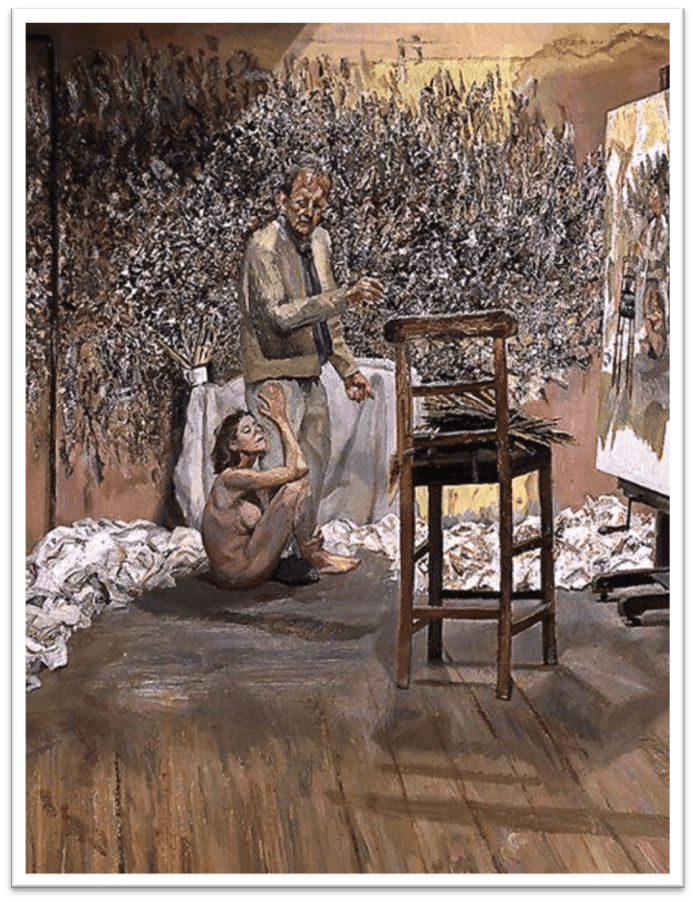
Abstract
This essay examines how Lucian Freud’s artwork serves as a commentary upon the human condition through his depiction of the body. The human condition encompasses universal experiences such as mortality, self-realization and the search for meaning. I will analyse Freud’s approach to painting, his method, technique and the sitters he paints. Freud’s work builds upon imagery of the body in art, and transcends the traditional representation of the nude. His portraits invite the viewer to engage with and subsequently reflect upon their own experiences. His collection of work is representative of the body’s role as a vessel for experience, and the way in which painting can act as a gateway and enable us to reflect upon the individual and collective experiences that link human beings.
List of Illustrations
Figure 1: Andrea’s Vesalius, Illustration from De Humani Corporis Fabrica Libri Septem, 1555.
Figure 2: Titian, Venus of Urbino, 1538.
Figure 3: Lucian Freud, Benefits Supervisor Sleeping, 1995.
Figure 4: Lucian Freud, Naked Man on a Bed, 1987.
Figure 5: Lucian Freud, Lucian Freud, 1985.
Figure 6: Lucian Freud, Freddy Standing, 2000-2001.
Figure 7: Lucian Freud, Man in a Blue Scarf, 2004.
Figure 8: Lucian Freud, Naked Girl 1966.
Introduction
The human condition encompasses the universal experiences that make up our lives. This awareness extends to our understanding of mortality, self-realisation, the search for meaning, and questions of existence and consciousness. It is through the creating and viewing of artwork of the body that we are confronted with, and are able to explore, concepts surrounding our own existence and human nature. British sociologist Brayn S. Turner stated that “the usefulness of the body to critical analysis lies in the fact that we both are and have bodies.”[1] It encapsulates the relationships, places, and emotions that define us as individuals, but also links us as a species. Its relevance in the artwork of Lucian Freud (1922-2011) is paramount. Freud was an artist concerned primarily with the human form and his career and legacy is underpinned by his relentless desire to capture sitters “how they happen to be.”[2] Freud’s work participates in a visual dialogue on the body that extends across all of human history. Through his scrupulous observation, painstakingly focused work ethic, and refined technique, Freud presents us with a vision of the human body unlike any in art. This demonstrates a deep understanding of the cultural, artistic and living world alongside a unique expression of the human being as a biological organism, showcasing the nuances of our external and internal lives. Freud’s work is guttural, instinctual, and it will “never leave the viewer indifferent.”[3] Daria Halprin says it is the artist who “brings us into a creative confrontation with ourselves and with our lives” and is able to “open and reflect back to us images of who we have been, who we are, and who we might become.”[4]
In this essay I will discuss how the artwork of Freud acts as a commentary on and reflection of the human condition, and specifically how it is able to do this. It is our bodies that “contain our life stories just as they contain bones, muscle, organs, nerves, and blood,” and it is the depiction of this in art that translates these ideas into something more tangible.[5] I will first explore the way in which Freud’s portraits are able to communicate deeply because of their role and nature as paintings. This includes the tradition of the nude in art, Freud’s painting techniques, his method and process. I will then discuss Freud’s use of anatomy before moving onto his subjects and how they can be read by the viewer as individual bodies through their expressions, posture, and body language. For each section I will discuss how these aspects of Freud’s art affect the way the viewer is able to read a painting, and why they offer the viewer a space to understand, view, and contemplate the human condition. Much of Freud’s work has been written about in different ways, for example his treatment of skin, his depiction of the internal lives of the sitters, his rigorous method of painting, his reclusive and bohemian lifestyle. However, I wish to explore exactly what it is about Freud’s work that is able to captivate the viewer, and reflect their own experiences and emotions through the body of someone else.
Lucian Freud
Lucian Freud was born in Berlin in 1922, grandson of psychoanalyst Sigmund Freud. During his youth, he had a varied artistic education and attended several schools including the Central School of Art in London, the East Anglian School of Painting and Drawing, Goldsmiths University of London and occasionally the Slade School of Fine Art. He worked as part of the ‘School of London’, a term coined by artist R.B. Kitaj to describe a group of artists in the 1970s including Frank Auerbach (1931-) and Francis Bacon (1909-1992).[6] Their art characteristically focused on loose, figurative realism, with distinctive and often expressive techniques. The group, and Freud in particular, resisted the mainstream, avant-garde trends of the art world at the time.
Freud’s approach to portraiture is noted for its stark, severe realism. Freud instead focused obsessively on truth, and observed his sitters with “consistent integrity” and “devastating candour”.[7] He stuck stubbornly to this method, ignoring the “many trend waves that washed over the art world” at that time.[8] He painted for an era “when such airy notions as essence, soul, eternity, human nature and God” seemed “self-indulgent”” and “sentimental” and thus disregarded the idea of metaphysical representations in art.[9] In spite of this, Freud contributed to a body of work which had been associated with such notions for centuries, that being the human form.
The Body in Art
In Martin Kemp and Marina Wallace’s Spectacular Bodies: The Art and Science of the Human Body from Leonardo to Now they state that “the representation of the human form has played a central role in the quest to deal with the great issues of birth, life, and death in relation to the transcendent reality of the divine”.[10] The Renaissance tag ‘man is the measure of all things,’ Kemp argues, encapsulates the idea that the human body, as the vessel of all experience, is central to furthering our collective understanding of the world.[11] Early anatomists such as Andreas Vesalius (1514-1564) illustrate the “divine architecture” of the human form, presenting anatomically accurate human bodies, posed heroically “within the grandeur of natural creation” (Figure 1).[12] These depictions were intended to illustrate man’s relationship with God, conveying concepts of profound significance during that period. The experience of being in a body is constant and universal and thus all things can be linked to it. Metaphysical notions are built into our collective understanding of bodies in art, making them inseparable from such ideas. Thus, art of the human form is intrinsically tied to the human condition, and as such, the body in art gives us “a literal and concrete structure that expresses who we are, so every part and function of the body can also be understood as metaphors for the expression of our being.”[13] It is through the deliberate choices and intentions of the artist that this connection is elevated, imbuing the art with more nuanced and specific meanings.
Reading a Painting
Freud aimed to avoid explicit storytelling. However, as viewers, we often attempt to infer meaning onto paintings. In figurative art, we primarily do this in two ways. The first of these is the reading of a painting, whereby viewing any artwork encourages us to search for meaning or a narrative. The second is through the reading of the human body itself. In a painting, we try to understand what is depicted, what the artist wants us to see, and what relevance the painting might have to our own lives. “it is expected that we will ponder the cause; the work’s invitation that we do so is the artist’s invitation that we ponder the work.”[14] When a piece of art is displayed, the viewer instinctively seeks to understand it. Erwin Panofsky writes “a man-made object […] demands or does not demand to be experienced, for it has […] “intention”.”[15] The work of Freud gives us a space to contemplate, it is the creation of a piece of art that gives the image greater meaning to the viewer. A historical painting is “a vehicle of communication”.[16]
The Nude
In addition to reading Freud’s work through his method, technique and overall aesthetic, a painting is read through the associations it creates with the viewer. The depiction of the naked body in art has been a subject of constant interest and is a central theme in art, its portrayal being deeply embedded in art history and tradition. Freud’s engagement with and departure from this tradition amplifies the power of his work.
The representation of the naked body in art is profoundly interlinked to our collective understanding of the artistic discipline. As Lynda Nead observes, “more than any other subject, the female nude connotes ‘Art.’ The framed image of a female body, hung up on the wall of an art gallery, is shorthand for art more generally.”[17] This holds true for both male and female bodies, encompassing the smooth-skinned, serene female nude and the muscular, powerful male forms often depicted in classical paintings and sculptures. Traditional depictions of the nude in art are rooted in Renaissance ideals, presenting the body as an idealised vision of humanity. Kenneth Clark writes that the classical scheme eliminated “wrinkles, pouches and other small imperfections” of which we are “immediately disturbed.”[18] Titian’s Venus of Urbino 1534 (Figure 2) represents an allegory of marriage, reminding women of their marital obligations.[19] The representation of Venus is undoubtably erotic, with smooth skin, long hair, and an unchallenging stare. At her feet sleeps a dog signifying her fidelity and in the background a young girl and woman represent motherhood. Titian represents “the perfect Renaissance woman” who is a “symbol of love, beauty and fertility.” [20]
Kenneth Clark’s The Nude (1956) argues that “we do not judge it as a living organism, but as a design”, the idea of the ‘nude’ holds weight.[21] The viewing of a naked body in art has a deep rooted history and thus comes with specific connotations and assumptions that perhaps cloud our view. Clark suggests the artistic representation of the body is not always real, “in almost every detail the body is not the shape which art had led us to believe” and concludes that “the nude is not the subject of art, but a form of art.”[22] In this way, the nude in art reflects our cultural history, ideas and schemas that have remained over centuries, but it also restricts the way we are able to understand depictions of the body in art. It is important to note that while Clark is an knowledgeable and well known scholar on this topic, his writings are considered somewhat outdated and perhaps no longer reflect our cultural understanding of the naked body in art. His argument is, however, poignant when addressing Freud.
Though much of Freud’s figurative work depicts the naked body, his paintings are not restricted by traditional ‘design’. He insisted on calling them “naked portraits” rather than “nudes”, clarifying a clear distinction between the classical nude, and the naked bodies which he painted.[23] Clark, whom Freud was associated with, discusses the use of the terms “naked” and “nude” in his book. He writes “to be naked is to be deprived of our clothes” and it implies “embarrassment”, whereas the word “nude” carries “no uncomfortable overtone” and presents an image “not of a huddled and defenceless body, but of a balanced, prosperous and confident body.”[24] Larissa Bonfante adds that “just as clothing could serve different purposes, so nakedness and nudity could have different meanings”.[25]
Nicholas Penny writes that “Freud distrusts a certain type of invention in art”, which likely influenced how he defined his own work.[26] The cultural weight of the term “nude” in association with his paintings adds numerous associations and an essence of storytelling. Clark asserts that the absence of “wrinkles” and “imperfections” in the classical nude are what renders it a “design” rather than a living being. Freud’s aim in painting was to portray the human being truthfully and in detail, showing the human as an “organism” rather than “design”. In Freud’s naked portraits “one is confronted by a starker, less mediated reality” evoking a sense of embarrassment almost like eavesdropping.[27]Where the traditional nude is made to be looked at, to behold the human body in its prime, at its most ideal, Freud’s work shows it in its natural state, imperfect, irregular, aged and emotionally charged. Freud stated “when I’m painting people in clothes I’m always thinking very much of naked people, or animals dressed”.[28]His portraits are uncomfortable yet powerfully descriptive of the human experience.
Freud’s Benefits Supervisor Sleeping 1995 (Figure 3) features Sue Tilley, completely naked and slumped on a couch in the artist’s studio. Her pose, with one hand on her breast and the other atop the sofa, and her face pressed into the arm, exposes rolls of fat sagging from her body. “mountainous flesh rolls out of the picture and billows towards us”.[29]The painting depicts a reclining woman, a conventional enough subject, however Freud depicts an overweight body, something rarely depicted in art. Lynda Nead writes that in the aesthetic of the nude “fat is excess, surplus matter. It is a false boundary, something that is additional to the true frame of the body and needs to be stripped away.”[30]Freud’s painting of Tilley breaks this convention, presenting an overweight body unapologetically. Martin Gayford comments that Freud paints her “unashamed of being naked, unashamed of looking unusual, unashamed of being fat.”[31] Leigh Bowery, a close friend and another of Freud’s sitters, described her body as “flesh without muscle,” that developed a different kind of texture through bearing such a weight.[32] Freud’s portrayal of flesh in this painting is striking, you feel the weight of it in the deep shadows of the folds of skin, and luminosity of the areas which are highlighted. You feel the way her cheek presses into the couch, her arm is almost braced for balance behind her. Her body has a “glorious lightness as well as with mass, weight, bulk, and density” says Ellen Handler Spitz “as I stood before it I gradually began to feel myself inside its skin.” [33]Perhaps through the choice of such a model, Freud was able to showcase his ability to paint skin in such a way. The painting is deeply immersive and Tilley’s flesh is captivating.
In Naked Man on a Bed 1987 (Figure 4) Freud paints a man hunched over with his face pointing down as he lays on a bed, asleep and curled like an animal. His legs are tightly held together and his arms are pinned under his chest by his body. His body twists at the hips where his genitals are clearly on display. His body is scrawny, bones visible through his torso and you clearly see the muscles, hairs and veins over his legs and feet. Once again Freud does away with the classical, muscular figures you find in male nudes. This is an image of vulnerability, the unguarded subject unaware of the viewer, the sense of voyeurism becoming a prominent feature of the image.
Freud’s deliberate choice to create “naked portraits” instead of nudes marks his departure from idealised depictions of the body. Unlike the traditional nude, which uses similar, stale poses to depict the body, Freud’s portraits use different positions, often chosen by the subjects themselves. These are the natural states the sitters find themselves in once in Freud’s studio. They are positions that the subject would stay in for hours at a time, all the while lowering their guard and allowing their bodies to relax or tense up as they pleased. These portraits display bodies that are vulnerable, confident, old, young, tired, unhappy, and curious. Freud’s approach, focusing on the authentic rendering of the human body, allows his work to convey individual meanings that are unique to each painting and arise from the sitter’s pose, composition, expression, colour, and numerous other factors. In contrast, the traditional nude carries a singular, overarching meaning shaped by preexisting notions. By breaking away from these conventions, Freud’s artwork offers a more profound commentary on the multifaceted nature of human beings, celebrating individuality and imperfection. Where the traditional nude continuously uses similar poses designed to show off the body at its best, within Freud’s body of work we see a huge array of different emotions, bodies and lives. It is through his intentional breakaway from the traditional schema of the nude body, and insistence that it is not a nude he paints, that he is able to display the multifaceted nature of human beings, each of us individuals and imperfect. As a viewer, the instinctual reaction to such a painting as opposed to the traditional imagery of the nude allows us to understand that Freud’s art is showing us something different and thus we seek to understand what this is. As such, Freud’s break from the characteristics of the ‘nude’ allowed his artwork greater potential as a commentary on the human condition.
Method and Technique
The technique, style, and materials used, as well as the associations we have with certain types of art, come into play when reading a painting. “Colour, shape, texture, and many other factors affect the feelings conveyed by paintings”, all of which contribute to how Freud presents and reveals the human condition.[34] Freud’s primary medium was oil paint which is easy to blend and is slow drying. It is known for its exceptional ability to represent skin, and when layered with glaze allows light to refract off the layers beneath, thus creating a glossy, translucent quality. Notably, Freud used Kremnitz white, a paint that “coagulated in little lumps”, as the paint dried until the surface was “coarsely granular”. Though heavy, it was able to depict the richness of skin.[35] Freud asserted that he wanted paint to work “just as flesh does”, thus he chose paints that allowed him to do this.[36]
Freud’s process was deliberate and slow, often requiring months of sittings before a piece was finished. Martin Gayford writes “a great deal of what LF [Lucian Freud] does during the sessions of painting is actually thinking. Each mark is pondered in advance, evaluated when it goes down, and if necessary altered or removed.”[37] Freud’s painting style changed significantly over time. Initially, he produced small, linear works in smooth blocks of colour with sharp outlines which are often associated with the work of the Surrealists. Later, influenced by Francis Bacon, he began using a hogs hair brush which gave his work a rougher texture. This transition enabled him to work more expressively, and with the addition of a palette knife, his paintings clearly showed the “traces of the bristles” on the canvas, like “lines of force” as he applied it.[38] These textured, energised brushstrokes enhance the emotional narrative of the paintings, and give the painter greater presence within the work. His use of paint was focused on form, colour, the variations in tone, shade, direction and movement and created a “feeling of the weight, texture and […] uniqueness”.[39]
Individual colours, and their combinations are important. There is more than a century of study on the effect of colour stimuli on evoking emotions, and it has been proven that colour influences human perception, behaviour, and feelings.[40] Freud’s colour palette was sombre, and muted and his work is characterised by its richness of colour used in a restrained and subtle manner. He described them as “the colours of life” which “don’t draw attention to themselves”.[41] He perhaps used muted tones in order to avoid an excess of any one colour thus avoiding any distinct emotion being drawn from the piece as a result of the colours present.
Instead, his work appears balanced colour wise in order to reflect the subject, to feel natural and document a moment in time – something truthful. Within his body of work, we often see the majority of a painting through muted colours, beiges, browns, yellows, creams. The backgrounds are often a combination of these colours. The body is dispersed with these colours too, but Freud brings out the texture and hue of the skin with white brushstrokes as highlights and bright red/pink colours to emphasise areas of muscle or alterations in the colour of the skin, particularly on limbs, ears, and eyes. These colours provoke first an atmosphere of inaction, the dingy setting of the artist’s studio which feels almost liminal when painted in such a way, but the highlights, and brighter colours he uses sparingly generally highlight the human body, details that show life, like red under the eyes or the blue of veins under the skin. The colours used in Freud’s work generally are not presented in a way we might associate with beautiful paintings. They are the stark, stripped down colours of the mundane and real world, offering no intentional exaggeration of emotion or drama. The viewer’s attention is centred upon the human body in nondescript spaces. Freud presents a non-traditional depiction of the human form, but one that is perhaps more reflective of the real human body and experience.
In Martin Gayford’s Man with a Blue Scarf: On Sitting for a Portrait by Lucian Freud (2011), he details his year-long experience of sitting for Freud for an oil portrait (Figure 5) and an etching. Gayford documents his observations and provides insight into Freud’s painting process on an intimate level. He presents the idea that Freud sees and paints the world in “forms”, the shapes, colours and angles that constitute the world around us. He notes that Freud’s interest in muscles stems from them being part of “that ‘world of forms’ of which art, he says, consists”.[42] Freud merged these “forms” in paint until they became a recognisable shape. Gayford describes his paintings like lifeforms “growing from a singular point”, beginning in the centre and working outwards, a method visible in Figure 6, a half-finished self-portrait begun in 1985. Aside from slight smudging and faint lines mapping out the canvas, the paintings appears from a collection of ragged beige marks that are slowly forming the structure of his face. Catherine Lampert writes “Freud has the muscular acuity and concentration of a jockey or cellist” with their “blinkered approach […] conceiving each painting from quite a naïve basis”.[43]
The initial lack of overall form in Freud’s paintings highlights his exceptional observational skills, allowing him to meticulously focus on the angles of a person’s face and work accurately from point to point. Freud allowed each picture to be “conceived” from no plan or idea of where it might go, allowing it to take form as it was painted. This non-traditional and more complicated approach gives the impression that the painting is a living entity – an effect Freud deliberately sought. This perhaps one that enhanced Freud’s process and enabled him able to produce a successful final image. Freud’s comment that portraits can “reflect” life is important here. Gayford writes that Man in a Blue Scarf (2004) is a painting of himself, watching Freud, watch him. The process of seeing, thinking and experiencing is central to Freud’s work, the presence of sitter and artist together in the room being one aspect of this. Gayford writes that his portrait felt like “an entity that follows its own inner laws”. This is perhaps an effect bred from Freud’s process, the freedom it gives him and the way it alters the painting.[44] The term “entity” suggests it has a life of its own, gained perhaps from the interactions between Freud and Gayford during its creation, the work and focus Freud put into its creation, the method in which Freud painted it with, and it as an object representing all the different facets that come into play in Freud’s portraits. Freud states that “the picture in order to move us must never merely remind us of life, but must acquire a life of its own,” an effect imbued into his work as a result of these that in turn enable the viewer to perceive the painting as its own “entity”.[45]
Freud’s painting sessions took place in his London studio in a grand double Georgian room, spacious but including little unnecessary decoration or furniture.[46] Gayford writes that Freud’s studio is like an “operating theatre”, it is “designed so the object can be viewed.”[47] This description emphasises Freud’s methodical approach, painting under controlled conditions where “the quality and direction of the light is of fundamental importance”.[48] Furthermore, Gayford cites Malcom Gladwell’s The Tipping Point (2000), where he says “context is crucial to portraiture” since it is “crucial to all varieties of human behaviour.”[49] This is in reference to the effect the studio space has on the sitter’s behaviour. In Freud’s studio “you are unusually conscious of the surface of yourself” says Gayford, “what is this thing called ‘me?’ That is of course the central enigma of portraiture”.[50] Here he outlines the importance of portraiture in the self-actualisation, and in the contemplation of one’s own body and mind. It is a subject entirely reliant on our perceptions of ourselves and those living beside us. It is both in the process and product of Freud’s work that these concepts are brought to light. Gayford questions himself under the intense scrutiny of another being, the idea of being perceived and thus understanding how you perceive others in turn. Confronted with an artistic representation of the human form, we in turn are able to feel perceived. The individuality of someone else’s body allows our own individuality as a conscious being to stand out to us in contrast. Figurative art itself is the gateway to this and the concept of the human condition, but it is through Freud’s imagery that this is brought to further clarity.
Reading the Body
The second key meaning we find in Freud’s work, is through the observation of the body itself. Kemp and Wallace write “we are all obsessive people watchers and we are all instinctive physiognomists. We cannot insulate ourselves from the biologically in-built urge to react in a trance to the array of visual signs presented by another person.”[51] Martin Gayford writes “The terrain of the face is one to which human beings are attuned to an astonishing extent […] These are the physiological and psychological facts that underlie the art of portraiture […] we look with fascination at the faces of people we do not know.”[52] It is through this close observation of Freud’s paintings that we see specific individuals, each with their own lives, feelings, and thoughts, all of which is conveyed through the muscles, posture and expression. As humans are so adapted to reading body language and expressions that Freud’s meticulously accurate portrayals of the human body becomes readable, despite their clear appearance as a painting. It has been shown that artwork that involves faces or figurative art consistently activates a specific area of the brain devoted to the recognition of faces.[53] When we are presented with one of Freud’s portraits, we read it both as a painting, and as a human body, resulting in a unique blend of meaning that neither alone could convey. This is a result of the accuracy of depiction of the human body, the way that Freud renders his subjects, their muscles and body structure, alongside their facial expressions, posture and hand gestures which allow them to be read as we would read a living being.
Anatomy
A crucial element in Freud’s painting process is his accurate depiction of anatomy, a fundamental feature of most figurative art. Clark writes “the figure artist cannot forget the components of the human body any more than the architect can fail to support his roof.”[54] In “The Study of the Human Machine: Books of Anatomy for Artists”, Monique Kornell discusses the essential role of anatomy in artist training since the Renaissance. She quotes sculptor and draughtsman John Flaxman (1755-1826) “the human figure […] cannot be represented without an accurate acquaintance with its structure […] the form of the bones, the mechanical structure of the movements of the joints, the laws of extension and contraction in the muscles, with a variety of phenomena relating to the internal economy, and indicated in the exterior of the human form.”[55] Freud’s intimate knowledge of anatomy is the foundation of his figurative paintings. Renaissance humanist and artist Leon Battista Alberti writes in his 1435 treatise on painting “to build up the body from the bones, adding the muscles and then the skin.”[56] He further says that through this technique “the position of the underlying bones […] are easily discernible.”[57] It could perhaps be further argued that without understanding the intricacies of the human body, the way the internal body functions, and the placement of the organs, the subject could not fully be comprehended as a living being. For Freud to produce work displaying the human body as a living organism with such intensity, the internal as well as the external body must become a point of reference in order to breathe life into the work. His observation is key to creating a realistic human being within a painting and the “marked realism of the exterior feature convey a depth of interior meaning.”[58]
Freddy Standing 2000-2001 (Figure 7) depict one of Freud’s sons, Freddy, standing cornered in a dingy room. He is fully naked with lank hair, elongated limbs that hang loosely from his body. His bones poke out beneath translucent flesh in varying shades of blue, red and beige. Behind him, his own shadow looms, distorted somewhat on the peeling yellowish wallpaper. His genitals are exposed and painted in a deep red colour. On the left hand side of the painting there is a window, the blind drawn over half of the way down, and reflected within is the figure of Freud himself, paintbrush in hand facing his subject. Notably, Freddy’s body is presented as a gradient, the colour of his feet is an irritated, uncomfortable looking red, travelling up the muscles of his calves, past his knees and towards the thighs. Where his hands rest, his skin starts to become a lighter, creamy pink shade, dispersed with the blue shadows of his muscles and bones. The colour of Freddy’s skin perhaps evokes imagery of blood travelling through his body. His positioning allows a full view of the body, almost front on, and it is suggestive of medical diagrams of the body. We can see how it is structured with clarity, but combined with the colours, particularly the red, Freud gives it life. Freud achieves an “uncanny feat of projective enactment as if somehow he is painting from the inside out and not the other way around” as we see with the portrait of Freddy.[59]
Furthermore, Freud presents Freddy almost like a cornered animal, standing dejected, staring. There is emphasis on his long limbs, particularly the arms, almost as though he doesn’t know where to put them. With his long, messy hair and the hair around his genitals he looks unkempt. In this image, the lack of clothing and blunt clarity in which Freud paints the subject presents a vision of the human being without airs and graces, reduced to a naked, base state and documented in such a way by paint. Freud’s reflection in the window, though partly depicting truth and the sitting as it happened, is important. Freud wears clothing and his face is not visible. In his upturned hand he holds a paintbrush, posed at an easel we cannot see and with it he holds a clear sense of power and control. He, as the clothed, and thus controlled, painter is able to bring the human form to clarity. The human being in a clothed state versus naked can be drastically different and Freud’s “naked portraits’ put the human body under a microscope. He views it, and renders it with intensity, willing others to see the body as it is laid bare.
Kornell mentions how knowledge of anatomy alone was not considered enough, and it had to be accompanied with observation of the living body.[60] Freud painted almost exclusively from life with the prior study of anatomy, allowing him to work intuitively and with a greater depth of knowledge when painting the figure before him. Freud is able to understand the movement of the joints and muscles which allows him to successfully indicate these in the exterior of the human form. The presence of a live model greatly enhances the painting for an artist, the figure feels alive and real. Indeed, Freud believed it important enough that he refused, for the most part, to paint from photographs. The knowledge and experience of another human being while he was painting is crucial to his process, positing that “I like models to be around in the studio even when I am painting something else. They seem to change the atmosphere, in the same way saints do, by their presence.”[61] Gayford states that as a result of the time Freud takes to paint, and the way he does it, he “quite naturally records vastly more information than a camera lens can see.”[62] His statement suggests that most of what he translated into his paintings comes from this real experience rather than just the image of a person’s appearance. He needed to see the living body in order to render it fully in paint.
Freud also refused to use professional models and picked his sitters meticulously, with great thought to the painting that it would produce. He wanted the unrefined, natural state of the human being, not someone trained to stay still. It is perhaps the uncomfortable nature of portrait sitting that he looked for, humans placed in a situation unlike any other to open up different thoughts, feelings and emotions from them. It is because of this, the naturalness of the models and the believability of the portraits that we are able to read them so clearly. The body language we read comes from the sitters, and because of the length of time that Freud takes to paint people they become “most themselves” says David Dawson, even if that is “slumping in boredom and weariness or wandering off into an inner maze of thoughts.[63]
Body Language
Freud’s anatomical accuracy and realism make his portraits feel alive, allowing viewers to connect with his subjects as real people. We cannot insulate ourselves from the biologically in-built urge to react in a trance to the array of visual signs presented by another person.[64] The human body is able to produce a multitude of nonverbal cues able to be picked up by others and as a result, body language and facial expressions are hugely important tools in communication. The reading of body language “entails not only recognizing and coding socially relevant visual information, but also ascribing meaning to those representations.”[65] Freud “represents figures that do make such a demand from the viewer to infer expressive meaning from the spatially frozen figurative representation by imagining the temporal context to which the frozen movement belongs”.[66] His art challenges the viewer to infer meaning from his figures by imagining their emotions in relation to their bodies.
In Naked Girl 1966 (Figure 8) Freud paints a young woman lying on sheets, fully exposed, stretched out with her head turned slightly. Her hip bones jut out, her ribcage is visible and the muscles of her abdomen, legs and arms show clearly through her skin. She brings up her hands, one resting upon her chest and the other laid beside her head, drawing attention. Her body is slightly off centre, slightly twisting at the hips to create an unbalanced posture. This combines to create “a sense of twitching animal liveliness and physical autonomy”.[67] The positioning of the sitter’s hands draws the eye, rendered in a pale red, along with her genitals, nipples and lips, contrasted with the pale cream of her skin. Her left arm is relaxed, exposing her body towards the painter and viewer, but the hand on the right is drawn up to her chest as though to cover herself. Her expression suggests concern or worry, eyes averted. We read her body as exposed and vulnerable but willingly so. The lack of features other than the white sheets and deep browns of the wall centres our entire focus on the woman’s form and upon viewing this painting you instinctively read the woman’s body language before reading it as a painting.
Conclusion
The human body is a vessel for all experience, a point from which we can understand and perceive the rest of the world. It contains our life stories just as it may “contain bones, muscle, organs, nerves, and blood,” and it is the central axis of our understanding of the human condition.[68] Lucian Freud’s work holds a particular strength when viewed as a body of work rather than just an individual painting, and across his life he provides a collection of people and snippets from his own life. His naked portraits are imbued with life and his work tells the story not just of individuals, but also of our collective experience living in the world.
He does this through his breakaway from the traditional nude, his intense and scrupulous approach to painting, the style and colour of his work alongside his anatomical accuracy, proficient understanding of the human form and subsequent depiction of it. We take into account the posture of the body, the facial expressions, the tension of the muscles but also the colour scheme, the brushstrokes, and the texture of the paint. The ambiguity of setting and the outside world, often accompanied with hints like shoes lying on the floor, plants, signs of life in the studio, allows us to place our bodies into the spaces that the sitters occupy. The painting acts as a gateway to these ideas, by nature it engages us and allows us to ask and explore our own questions surrounding the work. It shows us our own bodies in different spaces, poses and places in life, suspended in moments in time; these bodies function as vehicles of experience. Freud’s work offers us a mirror to contemplate our own beings and existence, our interactions with the world around us, and the human condition.
Bibliography
Alexander, Marsie M, Chann, Mary, Figura, Starr, Ganz, Sarah, del Carmen Gonzalez, Maria. Body Language, edited by M. Darsie Alexander, Mary Chann, Starr Figura, Sarah Ganz, Maria del Carmen Gonzalez. New York: Museum of Modern Art, 1999.
Bonfante, Larissa. “Nudity as a Costume in Classical Art.” American Journal of Archaeology 93, no. 4 (October, 1989): 543-570. https://www-jstor-org.nottingham.idm.oclc.org/stable/505328?searchText=&searchUri=&ab_segments=&searchKey=&refreqid=fastly-default%3A7d968a9a25794ade97b47586e3e7cae4&seq=2
Clark, Kenneth. The Nude. London: The Penguin Group, 1956.
Corbin, Ian Marcus. “The Heavy Eyelids of Lucian Freud”. First Things 216 (October, 2011): 41-45. http://nottingham.idm.oclc.org/login?url=https://www.proquest.com/scholarly-journals/heavy-eyelids-lucian-freud/docview/894123461/se-2?accountid=8018
Gayford, Martin. Man with a Blue Scarf: On Sitting for a Portrait by Lucian Freud. Thames & Hudson, 2010.
Gladwell, Malcom. The Tipping Point. London: Abacus, 2001.
Gonzalez-Torres, Miguel Angel & Aranzazu Fernandez-Rivas. ‘Lucian Freud: the ruthless genius.’ International Forum of Psychoanalysis 30, no.2. (January, 2021): 100-107.
Halprin, Daria. The Expressive Body in Life, Art and Therapy: Working with Movement, Metaphor and Meaning. London: Jessica Kingsley Publishers, 2002.
Handler Spitz, Ellen. “Lucian Freud: Psychoanalysis in Paint?” American Image 67, no. 3 (Autumn 2010): 441-450. https://www.jstor.org/stable/26305225
Kemp, Martin, Wallace, Marina. Spectacular Bodies: The Art and Science of the Human Body from Leonardo to Now. Los Angeles: University of California Press, 2000.
Kornell, Monique. “The Study of the Human Machine: Books of Anatomy for Artists” in The Ingenious Machine of Nature: Four Centuries of Art and Anatomy, edited by Mimi Cazort, Monique Kornell, R.B. Roberts. Ottawa: National Gallery of Canada, 1996.
Maglione, Anton G., Ambra Brizi, Giovanni Vecchiato, Dario Rossi, Arianna Trettel, Enrica Modica, and Fabio Babiloni. “A Neuroelectrical Brain Imaging Study on the Perception of Figurative Paintings Against Only their Color Or Shape Contents.” Frontiers in Human Neuroscience (2017 Jul 25, 2017/07/25/). doi:https://doi.org/10.3389/fnhum.2017.00378. http://nottingham.idm.oclc.org/login?url=https://www.proquest.com/scholarly-journals/neuroelectrical-brain-imaging-study-on-perception/docview/2289594871/se-2.
National Portrait Gallery, “Lucian Freud Portraits”, 2012.
Nead, Lynda. The Female Nude: Art, Obscenity and Sexuality. London: Routledge, 1992.
Tate. “School of London.” 20th May, 2024. https://www.tate.org.uk/art/art-terms/s/school-london
Tipper, Christine M, Signorini, Giulia ,Grafton, Scott T. “Body Language in the brain: constructing meaning from expressive movement”. Frontiers in Human Neuroscience 9, no. 450, (August 21st, 2015). doi:https://doi.org/10.3389/fnhum.2015.00450.
Turner, Bryan S. The Body and Society. New York: Sage Publications inc, 2008.
Panofsky, Erwin. Meaning in the Visual Arts, Chicago: University of Chicago Press, 1939.
Penny, Nicholas. “Lucian Freud: Plants, Animals and Litter”. The Burlington Magazine 130, no. 1021, (April, 1988): 290-295. https://www.jstor.org/stable/883286.
Ranjgar, Babak, Khoshlahjeh Azar, Mahdi, Sadeghi-Niaraki, Abolghasem, Choi, Soo-Mi. “A Novel Method for Emotion Extraction From Paintings Based on Luscher’s Psychological Color Test: Case Study Iranian-Islamic Paintings.” IEEE Access 7, (28th August, 2019): 120857-120871. doi:10.1109/ACCESS.2019.2936896
Ruel, Malcom . “Lucian Freud and the Naked Self,” The Cambridge Journal of Anthropology 29, no.2 (2009): 10-20. https://www.jstor.org/stable/23820681.
Smee, Sebastian. Lucian Freud. Los Angeles: Taschen, 2007.
Uffizi Gallery, “Venus of Urbino by Titian”, 20th May, 2024, https://www.visituffizi.org/artworks/venus-of-urbino-by-titian/#:~:text=The%20painting%20represents%20the%20allegory,to%20fulfill%20to%20her%20husband.
Appendices
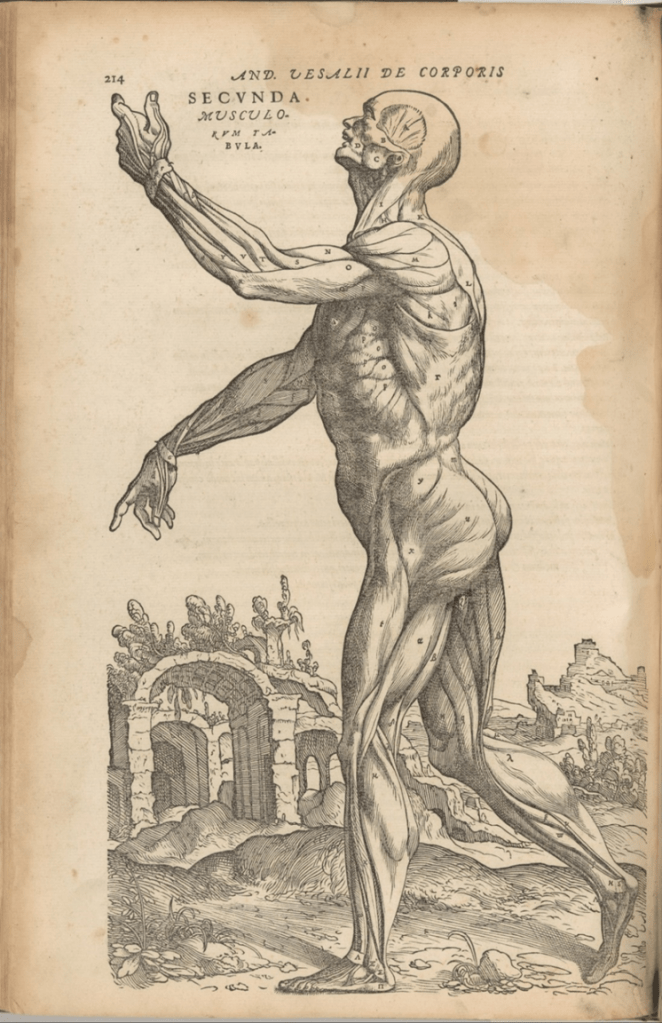
Figure 1, Andreas Vesalius, Illustration from De humani corporis fabrics (Of the Structure of the Human Body), 1555, woodcut.
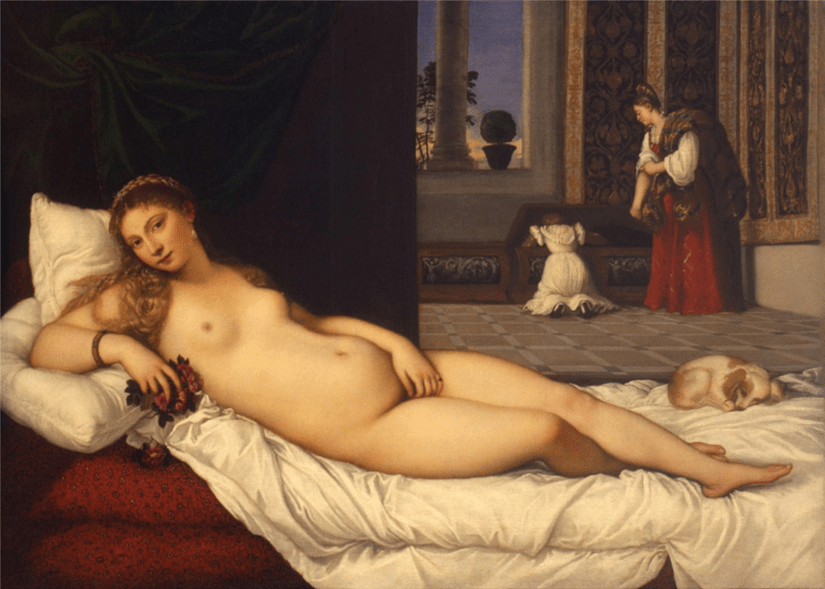
Figure 2, Titian, Venus of Urbino, 1538, oil on canvas, 119 x 165cm.
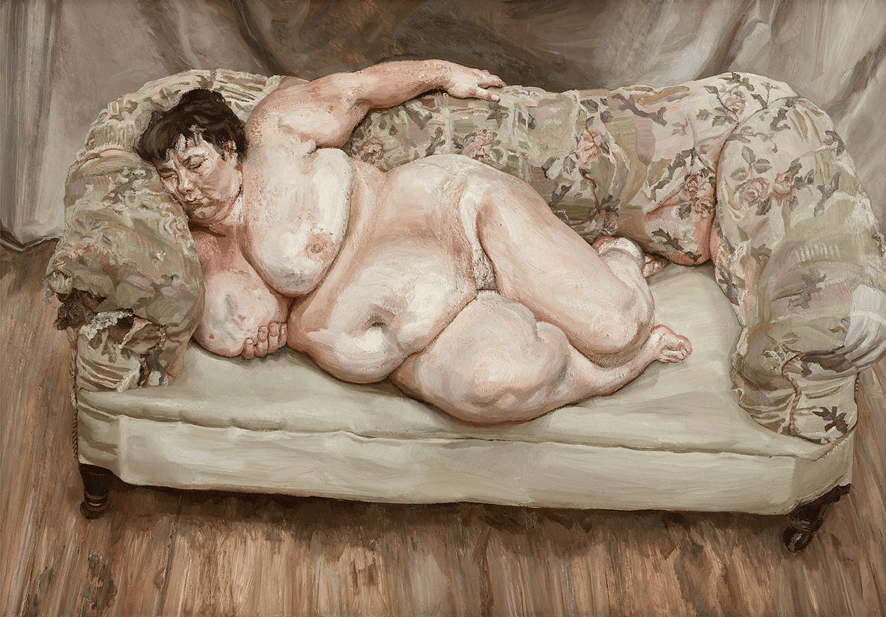
Figure 3, Lucian Freud, Benefits Supervisor Sleeping, 1995, oil on canvas, 151.3 x 219cm
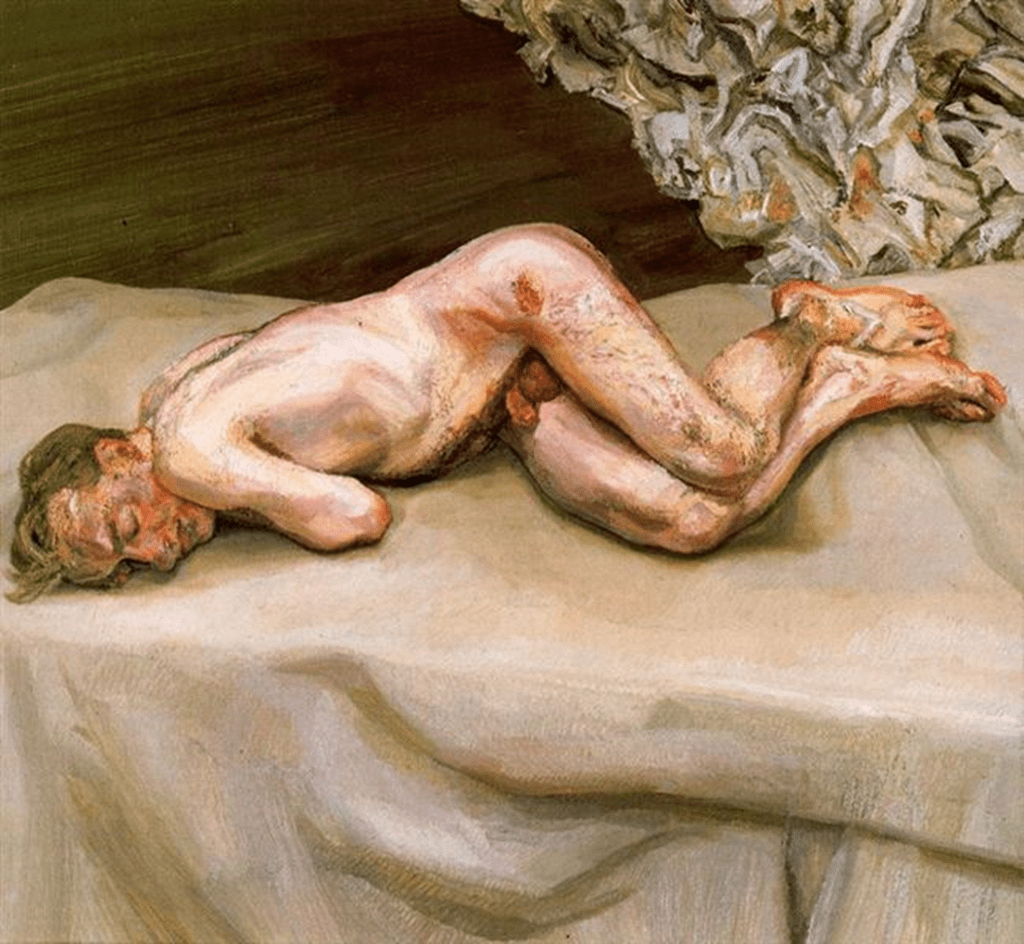
Figure 4, Lucian Freud, Naked Man on a Bed, 1987, oil on canvas, 56.5 x 61cm
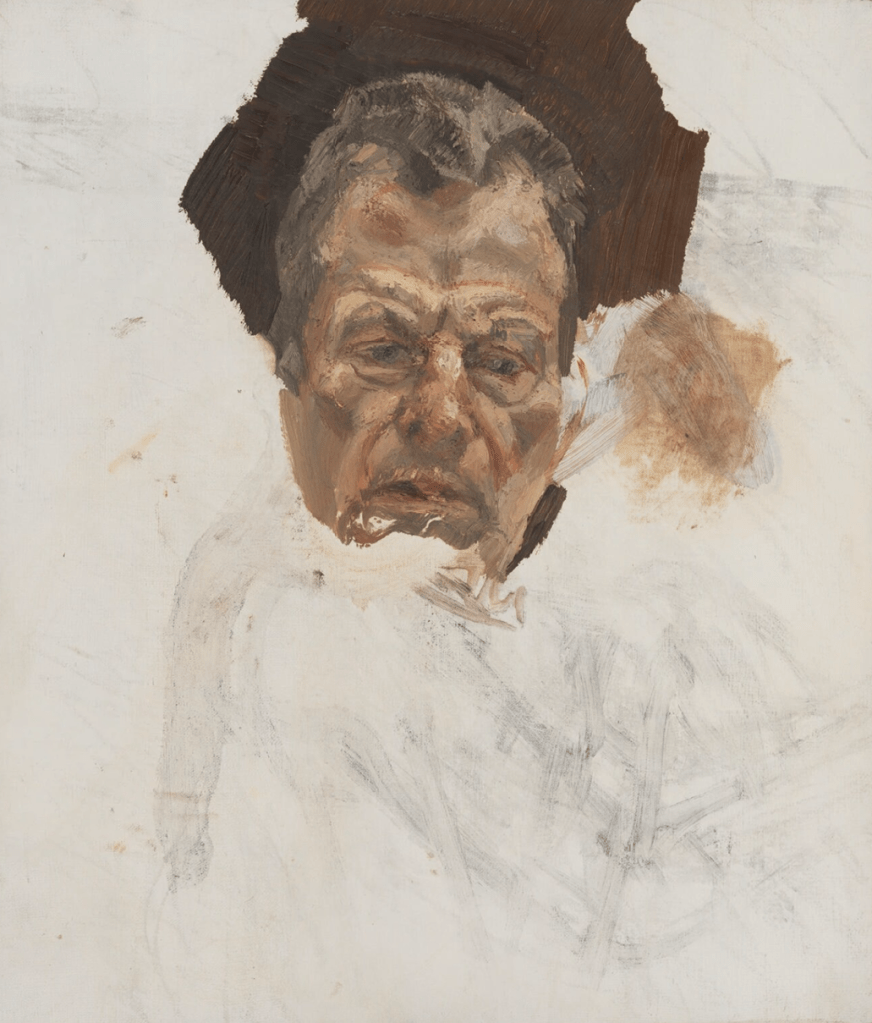
Figure 5, Lucian Freud, Lucian Freud, 1985, oil on canvas, 35.6 x 30.6cm
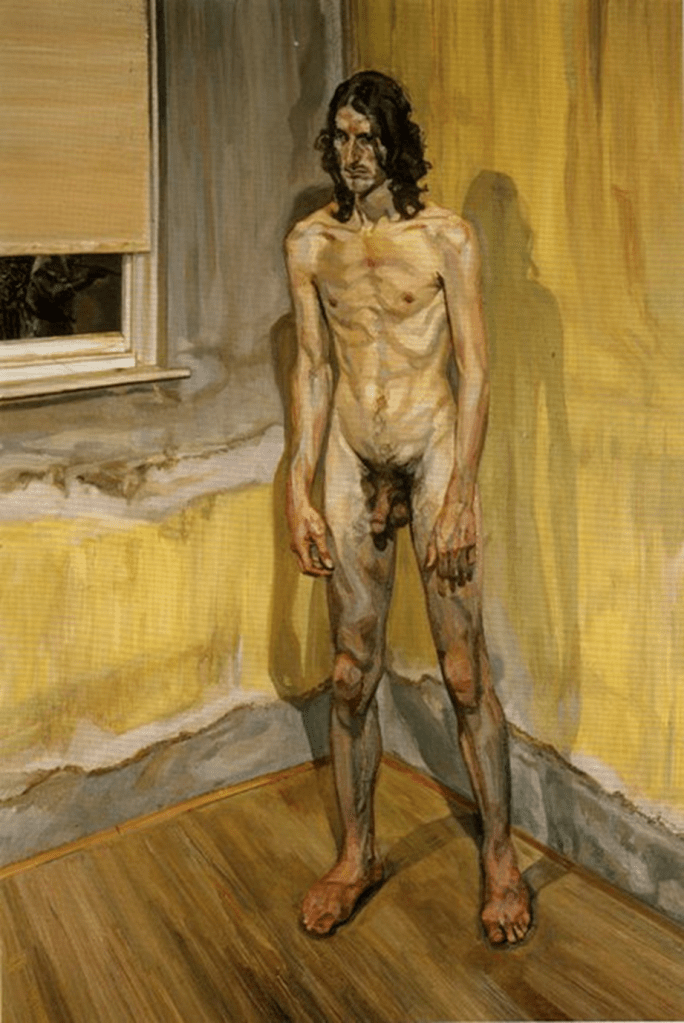
Figure 6, Freddy Standing, 2000-2001, oil on canvas, 248.9 x 69cm.
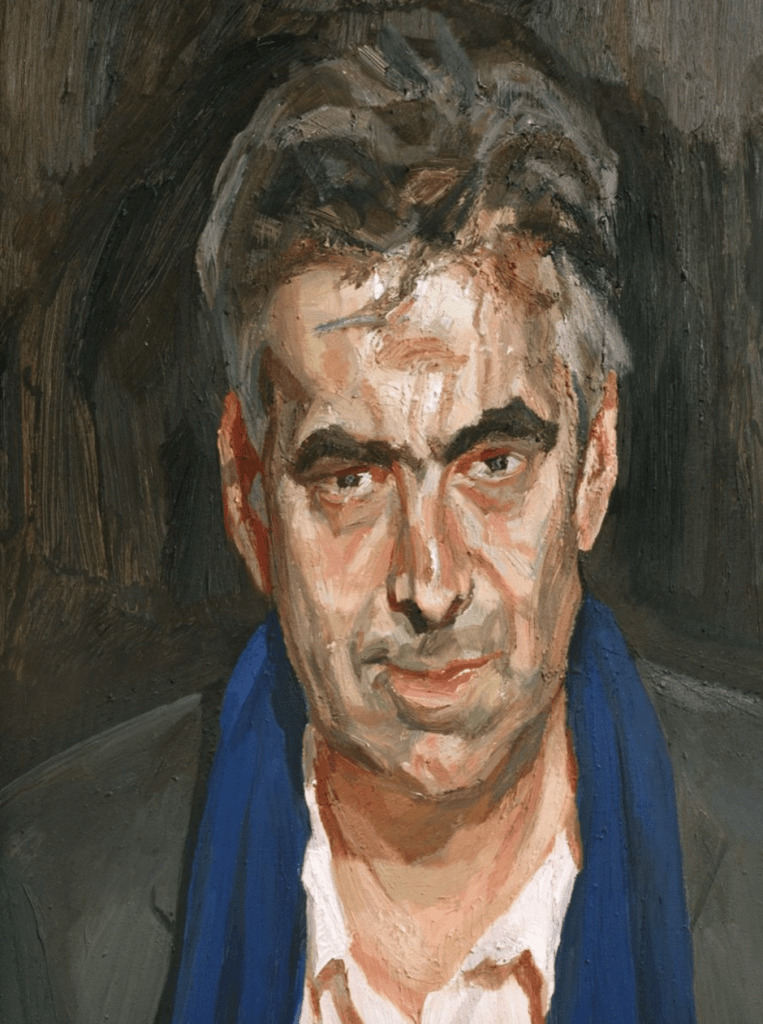
Figure 7, Lucian Freud, Man in a Blue Scarf, 2004, oil on canvas, 66.2 x 51cm.
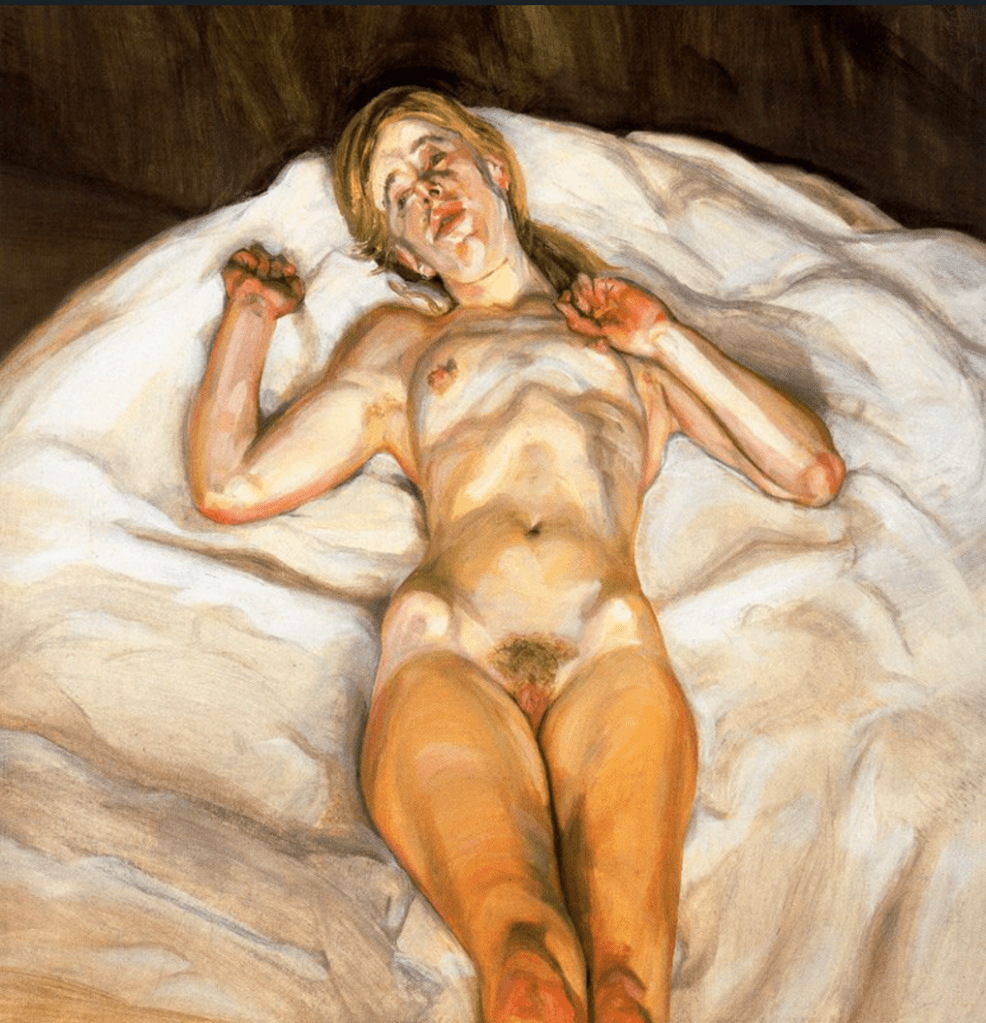
Figure 8, Lucian Freud, Naked Girl 1966, 1966, oil on canvas, 61 x 61cm.
[1] Bryan S. Turner, The Body and Society (New York: SAGE Publications inc, 2008.
[2] Ian Marcus Corbin, “The Heavy Eyelids of Lucian Freud”, First Things 216 (October, 2011), 41.
[3]Miguel Angel Gonzalez-Torres, Aranzazu Fernandez-Rivas, “Lucian Freud: the ruthless genius,” International Forum of Psychoanalysis 30, no.2. (January, 2021), 106.
[4] Daria Halprin, The Expressive Body in Life, Art and Therapy: Working with Movement, Metaphor and Meaning (London: Jessica Kingsley Publishers, 2002),19.
[5] Halprin, The Expressive Body, 17.
[6] Tate, “School of London,” 20th May, 2024. https://www.tate.org.uk/art/art-terms/s/school-london.
[7] Nicholas Penny, “Lucian Freud: Plants, Animals and Litter”, The Burlington Magazine 130, no. 1021 (April, 1988), 295.
[8] Ian Marcus Corbin, 43.
[9] Ian Marcus Corbin, 42.
[10] Martin Kemp, Marina Wallace, Spectacular Bodies: The Art and Science of the Human Body from Leonardo to Now (Los Angeles: University of California Press, 2000), 15
[11] Kemp, Wallace, Spectacular Bodies, 13.
[12] Kemp, Wallace, Spectacular Bodies, 15.
[13] Halprin, The Expressive Body in Life, Art, and Therapy, 17.
[14] John Elderfield, “Introduction” in Body Language, ed. M. Darsie Alexander, Mary Chann, Starr Figura, Sarah Ganz, Maria del Carmen Gonzalez (New York: Museum of Modern Art, 1999), 7.
[15] Erwin Panofsky, Meaning in the Visual Arts (Chicago: University of Chicago Press, 1939), 11.
[16] Panofsky, Meaning in the Visual Arts, 12.
[17] Lynda Nead, The Female Nude: Art, Obscenity and Sexuality, (London: Routledge, 1992), 1.
[18] Kenneth Clark, The Nude, (London: The Penguin Group, 1956), 4.
[19] Uffizi Gallery, “Venus of Urbino by Titian”, 20th May, 2024, https://www.visituffizi.org/artworks/venus-of-urbino-by-titian/#:~:text=The%20painting%20represents%20the%20allegory,to%20fulfill%20to%20her%20husband.
[20] Uffizi Gallery, “Venus of Urbino by Titian”.
[21] Clark, The Nude, 4.
[22] Clark, The Nude, 4.
[23] Gayford, Man with a Blue Scarf, 23.
[24] Clark, The Nude, 1.
[25] Larissa Bonfante, “Nudity as a Costume in Classical Art,” American Journal of Archaeology 93, no. 4 (October, 1989), 546. https://www-jstor-org.nottingham.idm.oclc.org/stable/505328?searchText=&searchUri=&ab_segments=&searchKey=&refreqid=fastly-default%3A7d968a9a25794ade97b47586e3e7cae4&seq=2
[26] Nicholas Penny, “Lucian Freud: plants, animals, litter”, 293.
[27] Malcom Ruel, “Lucian Freud and the Naked Self,” The Cambridge Journal of Anthropology 29, no.2 (2009), 16. https://www.jstor.org/stable/23820681.
[28] Martin Gayford, Man with a Blue Scarf: On Sitting for a Portrait by Lucian Freud (London: Thames & Hudson, 2010), 69.
[29] Ellen Handler Spitz, “Lucian Freud: Psychoanalysis in Paint?” American Image 67, no. 3 (Autumn 2010), 9.
[30] Nead, The Female Nude, 10.
[31] Martin Gayford, 210.
[32] National Portrait Gallery, “Lucian Freud Portraits”, 2012.
[33] Ellen Handler Spitz, “Lucian Freud: Psychoanalysis in Paint?” American Image 67, no. 3 (Autumn 2010), 8/9.
[34] Babak Ranjgar, Mahdi Khoshlahjeh Azar, Abolghasem Sadeghi-Niaraki, Soo-Mi Choi, “A Novel Method for Emotion Extraction From Paintings Based on Luscher’s Psychological Color Test: Case Study Iranian-Islamic Paintings,” IEEE Access 7, (28th August, 2019), 120857.
[35] Ibid, 111.
[36] Gayford, Man with a Blue Scarf,, 112.
[37] Ibid, 208.
[38] Ibid, 109.
[39] Gayford, Man with a Blue Scarf, 56.
[40] Ranjgar, Azar, Sadeghi-Niaraki, Choi, “A Novel Method for Emotion Extraction,” 120858.
[41] Gayford, 91.
[42] Ibid, 168.
[43] Catherine Lampert, Lucian Freud: Recent Work.
[44] Gayford, Man with a Blue Scarf, 107.
[45] Ibid, 108.
[46] Gayford, 178.
[47] Ibid, 226.
[48] Ibid, 226.
[49] Malcom Gladwell, The Tipping Point, (London: Abacus, 2001), 163.
[50] Gayford, 182.
[51] Martin Kemp, Marina Wallace, Spectacular Bodies, 15.
[52] Gayford, Man with a Blue Scarf, 93.
[53] Anton G. Maglione, Ambra Brizi, Giovanni Vecchiato, Dario Rossi, Arianna Trettel, Enrica Modica, Fabio Babiloni, “A Neuroelectrical Brain Imaging Study on the Perception of Figurative Paintings against Only their Color or Shape Contents” Frontiers in Human Neuroscience 11, no. 378 (July 2017), 2.
[54] Clark, The Nude, 17.
[55] Monique Kornell, “The Study of the Human Machine: Books of Anatomy for Artists” in The Ingenious Machine of Nature: Four Centuries of Art and Anatomy, ed. Mimi Cazort, Monique Kornell, K.B. Roberts, (Ottawa: National Gallery of Canada, 1996), 54.
[56] Kornell, “The Study of the Human Machine”, 62.
[57] Ibid, 62.
[58] Ruel, “Lucian Freud and the Naked Self”, 15.
[59] Handler Spitz. “Lucian Freud: Psychoanalysis in Paint?”, 9.
[60] Kornell, “The Study of the Human Machine”, 50.
[61] Gayford, Man with a Blue Scarf, 137.
[62] Ibid, 116.
[63] Ibid, 62.
[64] Martin Kemp, Marina Wallace, 15.
[65] Christine M Tipper, Giulia Signorini, Scott T. Grafton, “Body Language in the brain: constructing meaning from expressive movement”, Frontiers in Human Neuroscience 9, no. 450, (August 21st, 2015), 2.
[66] John Elderfield, “Introduction” in Body Language, ed. M. Darsie Alexander, Mary Chann, Starr Figura, Sarah Ganz, Maria del Carmen Gonzalez (New York: Museum of Modern Art, 1999), 7/8.
[67] Smee, Lucian Freud, 39.
[68] Halprin, The Expressive Body, 17.
 SILVIAPLAFF
Leave a comment