Walking into Emma Talbot’s Everything is Energy feels like stepping inside a living organism. Surrounded by vivid, spiralling colours and the rhythmic pulsating of a musical track, in her latest exhibition at the Arnolfini Gallery, Talbot continues to explore how we, as humans, inhabit the Earth alongside other living beings. She poses the question: what does it mean to exist as part of a whole, rather than as an isolated individual?
Born in 1969, Talbot is a British artist based in London whose practice weaves together storytelling through drawing, painting, animation, and sculpture. Her work often reflects on personal experience while examining our interconnectedness with the natural world, technology, language, and one another.
The exhibition spans two floors, each anchored by an 11-metre silk painting surrounded by sculptures, smaller paintings and drawings. These silks are the clear centrepieces – vast, fluid works that seem to breathe with colour. Using earthy yet luminous tones, Talbot paints distorted organisms that merge and flow into one another, their forms intertwined with fragments of handwritten text encased in white speech bubbles. The words pull you into her narrative, part poem and part meditation, and guide you through her exhibition.
Talbot’s use of sound, scale and colour turns the space into a sensory, almost bodily experience. On the first floor, her silk painting Are You a Living Thing That Is Dying or a Dying Thing That Is Living? (2025) traces the consciousness of living organisms – their senses, their thoughts and their cycles of renewal and decay. The silks hang in a circle with two openings that invite you inside. Once within, you are surrounded, life on one side, and death on the other. Across the fabric, Talbot’s phrases are key: “are you part of everything and everything is a part of you”, “your heart beats like a plant bursting with life”, “a vibrant aliveness fills you…your nails grow.” Around the text, plants, insects and human forms intermingle, creating a strong and clear narrative of life on this earth. Here, Talbot addresses you directly, absorbing you into her living imagery, probing you with the central question: what does it mean to be alive?
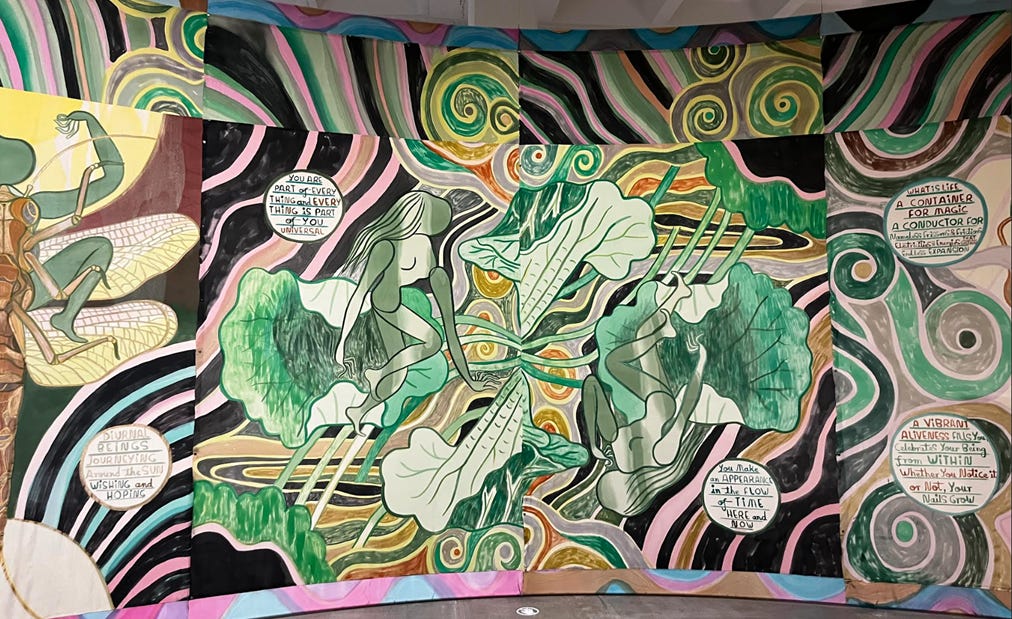
Figure 1, Emma Talbot, Are You a Living Thing That Is Dying or a Dying Thing That Is Living, 2025, installation, painted silk, The Arnolfini Gallery.
On the opposite side, Talbot writes, “you slip from one consciousness to the next” and “you look around for what matters, what you’ll cling to – there’s only love”. Around these words, yellowing plants fade beneath a deep purple sky, while a lone figure crawls into a white crevice – slipping, perhaps, into nothingness, or the next life. Her vast silk tapestry becomes a meditation on the natural cycle of existence, placing the viewer at its centre. Through the translucent fabric, you glimpse the movement of people on the other side, as though the work itself were alive with their presence or perhaps symbolic of a veil between life and death. One half of the silk depicts life, the other death; together, hung in two semi-circles, they complete the loop of the life cycle.
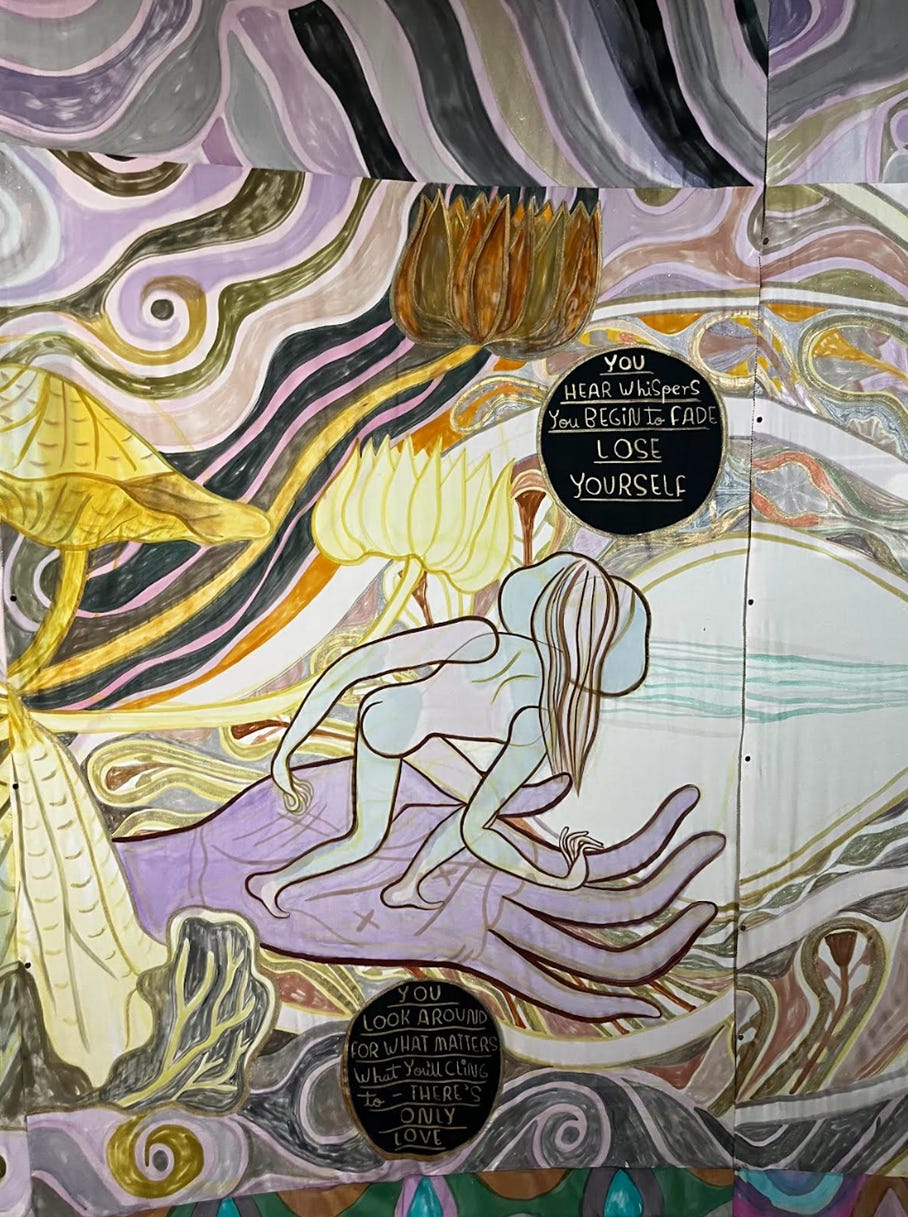
Figure 2, Emma Talbot, Are You a Living Thing That Is Dying or a Dying Thing That Is Living, 2025, installation, painted silk, The Arnolfini Gallery.
One of four sculptures nearby, Generative Plant (2025) – a stuffed fabric sculpture – sprouts humanoid forms from its textile base, a gentle reminder that human life grows from the same soil as everything else. Talbot’s merging forms suggest that the boundaries between species are illusory: all living things are part of one continuous organism. Within this environment, the viewer becomes another living element – a temporary participant in the gallery’s own ecosystem.
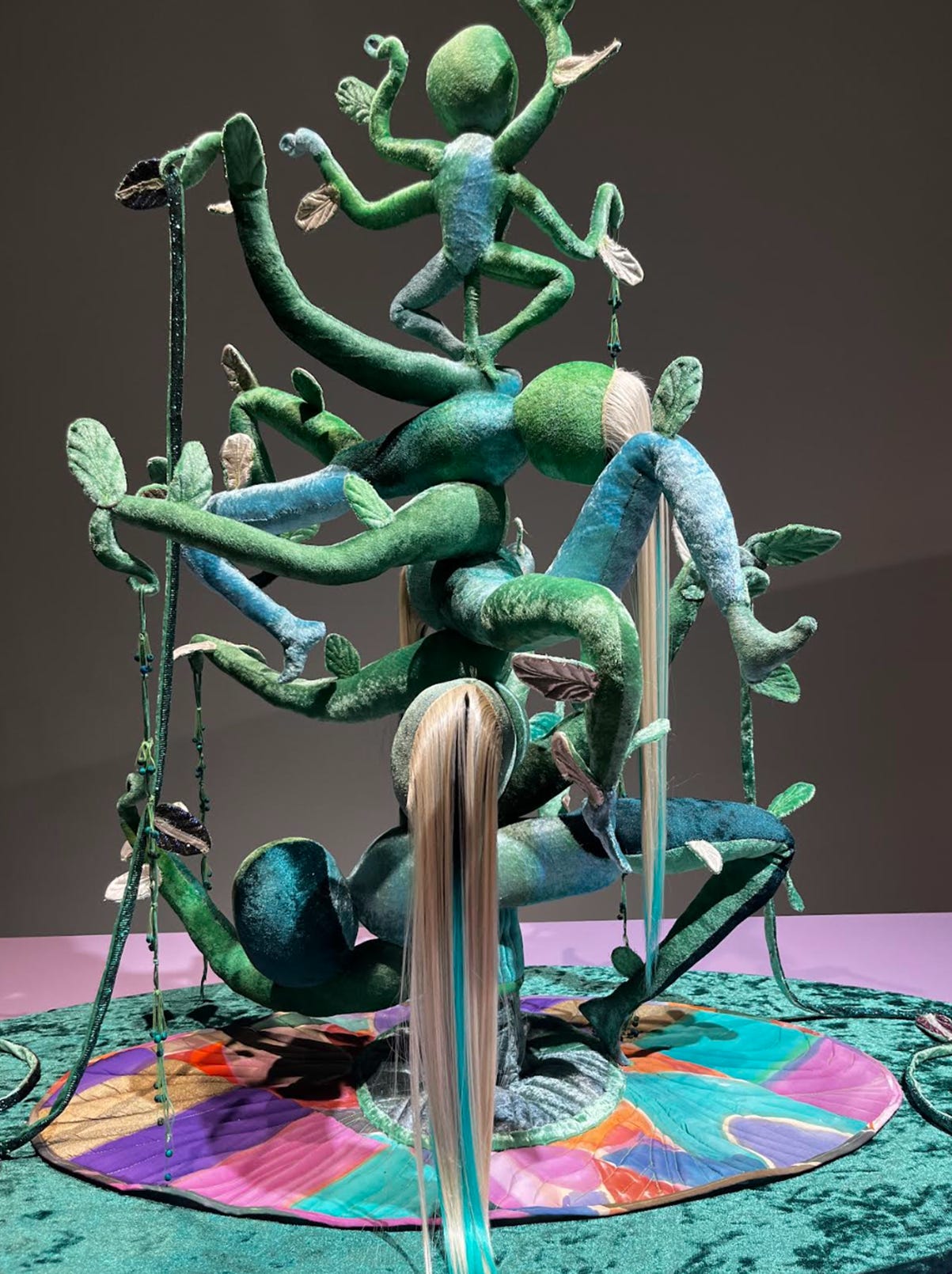
Figure 3, Emma Talbot, Generative Plant, 2025, mixed media (stuffed fabric), The Arnolfini Gallery.
Upstairs, the exhibition takes a darker turn, confronting the damage humans impact upon their own ecosystem. Once again, a vast silk painting (Everything Is Energy, 2025) commands the space, this time depicting the disruption of the natural world as a result of machines and manmade technology. Talbot uses an array of colours, coming together on a vibrant yellow light resembling perhaps a sun. She depicts sky, grass, water, smoke, clouds and animals clashing against one another and flowing into each other at the same time. At its centre, human-like limbs are entangled in wires and screens, painted within a stark white bubble that feels sealed off from the rest of the imagery. The colours are in sharp contrast here, sterile white and simple beige lines depicting the shapes within. Pipes branch off from the bubble, connecting it to the rest of the piece, and from them oil and chemicals gush into water, polluting the surrounding environment. Within the water, distorted figures suffocate in the contaminated liquid. Where Talbot’s earlier work celebrates the natural cycles of life and death, this scene depicts rupture – a system broken by human separation from nature. Talbot writes once again in narrative speech bubbles: “you can’t breathe, the air is thick with chemicals”, “a human cell, separation from all that is natural, from life, air conditioned and scented.” Around these words, contorted bodies and dying birds are surrounded by pollution, a world suffocating by the progression of human technology. Talbot exposes the dissonance of modern existence, our dependence on technology, distance from the natural world and inability to see the collective decay it is causing.
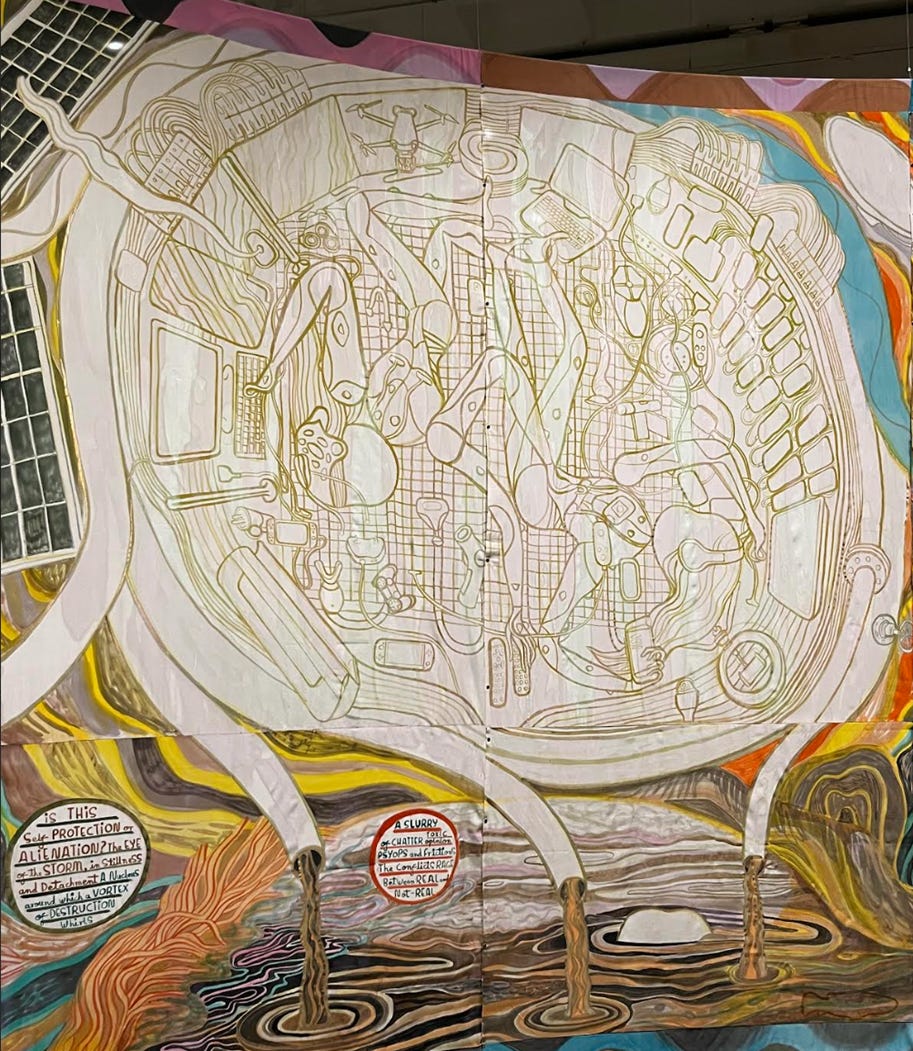
Figure 4, Emma Talbot, Everything is Energy, 2025, installation, painted silk, The Arnolfini Gallery.
You Are Not the Centre (Inside the Animal Mind) is a 17-minute animation which asks us “who’s at the centre and who’s marginalised?” Talbot takes the viewer on a journey through a “series of magical, psychedelic and unknown worlds belonging to various species”1. She highlights canine, arachnid, avian, cervine and insect, and how it might be to live as an animal in a human oriented landscape, corrupted by urbanisation, waste and the ongoing climate crisis. In this world, animals are guided by instinct yet are disoriented by human interference and become unable to rely upon their natural cycles and desires. She challenges the assumption that we exist apart from, or above, other forms of life. This animation is both hypnotic and unsettling and presents her vision of a world increasingly out of balance.
Everything is Energy leaves you with a profound awareness of the cycles that connect all living things — and the ways in which humans have disrupted them. The exhibition is inspired by Albert Einstein’s principle that everything is in a constant state of transformation. “Life is a kind of energy that moves through us” says Talbot, “and in that period of time we make actions that continually impact everything around us”.2 Talbot’s work reminds us that life is inherently reciprocal: all species consume energy to survive, and in death, return it to sustain others. Yet humanity, for all its advances, takes far more than it gives back. Our technological and social systems have fractured the balance of the natural world, leaving scars across ecosystems and endangering countless species — and ultimately ourselves.
1 The Arnolfini Gallery, panel for “You Are Not The Centre (Inside the Animal Mind)”, Everything is Energy, 2025.
2 The Arnolfini Gallery, panel for “Everything Is Energy”, Everything is Energy, 2025.
 SILVIAPLAFF